
Flood Damage Cleanup for Cranston Homes and Businesses
When water spreads across a floor in Cranston, every minute matters. Whether a burst supply line, a heavy storm, or a backed-up drain caused the flooding, the first hours decide how much of your home or business can be saved.
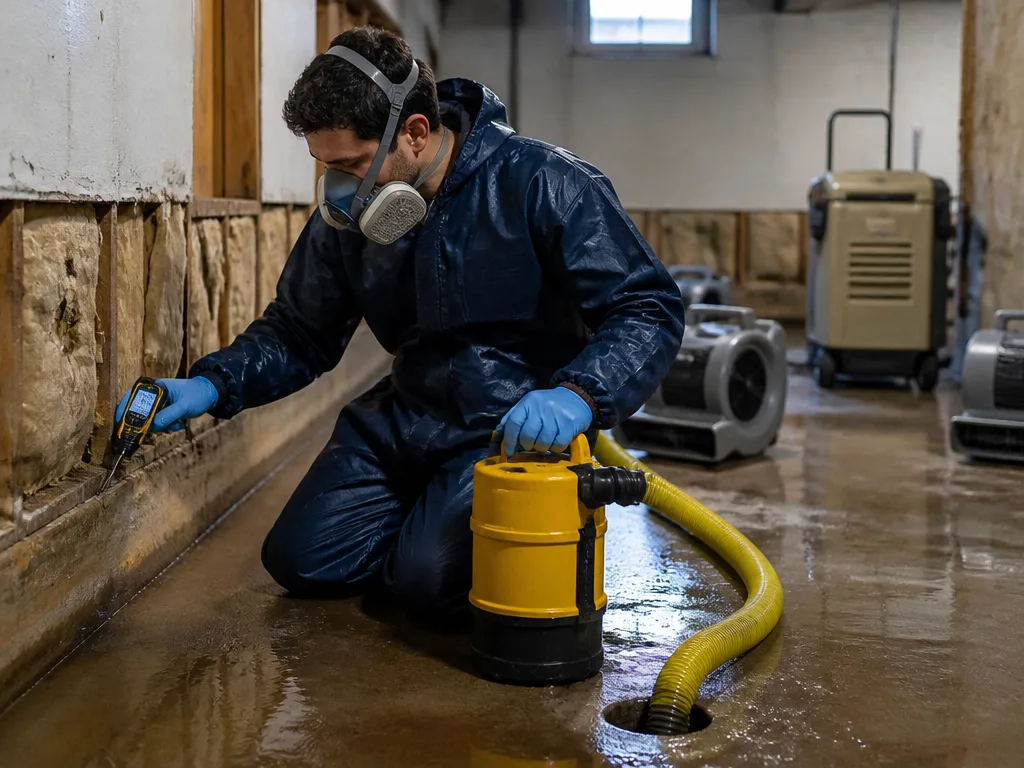
About flood damage cleanup
Flood damage cleanup covers much more than pumping out a basement. Our crew extracts standing water, inspects flooring, drywall, insulation, and furnishings for saturation, and removes materials that cannot be dried safely. We then place drying equipment and monitor humidity readings until the structure returns to normal levels. This service suits Cranston homeowners dealing with basement flooding, kitchen and bathroom water spread, and storm-related seepage, as well as landlords, property managers, and shop owners who need affected rooms reopened with minimal disruption. Our goal is a dry, clean, usable space that fits how you live or work.
Signs you need flood damage cleanup
- Puddles or standing water remain on floors, carpet, or basement slabs after the source has been stopped.
- Walls, baseboards, or ceilings show dark staining, bubbling paint, or soft spots that feel damp to the touch.
- A persistent musty odor lingers in rooms that recently took on water, even after surfaces appear dry.
- Carpet pads, subfloors, or hardwood boards are cupping, warping, or lifting away from the floor.
- Water has reached electrical panels, stored boxes, or furniture legs and you are unsure what can be saved.
- Humidity stays high in a room days after the flooding, making the air feel heavy and damp.
Why choose Cranston Toilet Overflow Cleanup?
- Our crew responds to Cranston flood calls with focus on fast water removal and careful material assessment.
- Restoration specialists explain which materials can be dried and which must come out, so you understand each decision.
- We bring industrial-grade extraction and drying equipment to every job rather than relying on fans alone.
- Our team tracks moisture readings throughout the drying process so the work is based on measured results.
- We serve Cranston homes and businesses with local knowledge of common water sources and building types in the area.
- Clear communication from start to finish means you always know what has been done and what comes next.
From phone call to finished job
Four straightforward steps. No upsells.
Your first call covers the source of the overflow, how much water got out, and which rooms it reached, so we know what to bring.
When a restoration specialist arrives, they walk the affected rooms, check the subfloor and baseboards with moisture readings, and note what needs removing.
We pull standing water with extraction equipment, lift wet materials that can't be saved, and set air movers and dehumidifiers until the readings come back dry.
After drying you receive a written summary of readings and work completed, and you can call our team with questions after the job wraps up.
What you get
Standing water is removed quickly, which limits how far moisture travels into walls and flooring.
Materials that can be dried are saved, so you avoid replacing more than the damage requires.
Drying equipment is placed and monitored so moisture levels return to normal before rebuilding begins.
Affected rooms are cleaned and sanitized, reducing odors and lowering the risk of lingering contamination.
Clear progress updates help Cranston homeowners and business operators plan around the work.
Documentation of the water damage and drying steps can support conversations with insurance adjusters.
Talk to a local pro now
(401) 558-6072Questions about flood damage cleanup
Don't see your question? Call (401) 558-6072 and we'll answer it.
How quickly should I call for flood damage cleanup in Cranston?
Call as soon as it is safe to do so, ideally within a few hours of discovering the water. Early extraction limits how far moisture spreads into flooring, drywall, and subfloors, which often means more materials can be dried instead of replaced. If the water is still rising, shut off the main supply or turn off power to affected areas first, then contact our team.
What does the flood damage cleanup process include?
The process typically starts with standing water extraction, followed by an inspection of floors, walls, and contents to identify wet materials. Our restoration specialists then remove what cannot be dried, set up air movers and dehumidifiers, and monitor moisture levels until readings return to normal. Cleaning and sanitizing of affected surfaces happens before the space is handed back to you.
Can you help with insurance paperwork after flooding in Cranston?
Yes, our crew documents the damage with photographs, moisture readings, and a written summary of the materials affected and the steps taken. This record can be shared with your insurance company or adjuster to support your claim. We do not decide coverage, but we aim to give you clear, organized information that makes the claims conversation smoother.
Will my carpet, flooring, and furniture be saved after a flood?
Whether items can be saved depends on the type of water, how long it sat, and the materials involved. Our restoration specialists assess each item individually and explain which pieces can be cleaned, dried, and kept versus which need to be removed for health and safety reasons. You will receive a clear explanation before any material is discarded.
How long does flood damage cleanup usually take for a home or shop?
Timelines vary with the size of the affected area, the amount of water, and how many materials need to be removed. Extraction and initial drying often take a few days, and drying equipment may stay in place longer until moisture readings reach target levels. Our team gives you a realistic timeline after the initial inspection and updates you as the work progresses.
Need flood damage cleanup today?
Real local restoration specialists. Careful work. One call away.